Saturday, 12 November 2011

New Wave

2012 will see a new wave of Dreaming Methods projects that use the developing technologies of HTML5 and WebGL to create cross-browser (and increasingly cross-device) experiences that do not require plug-ins.

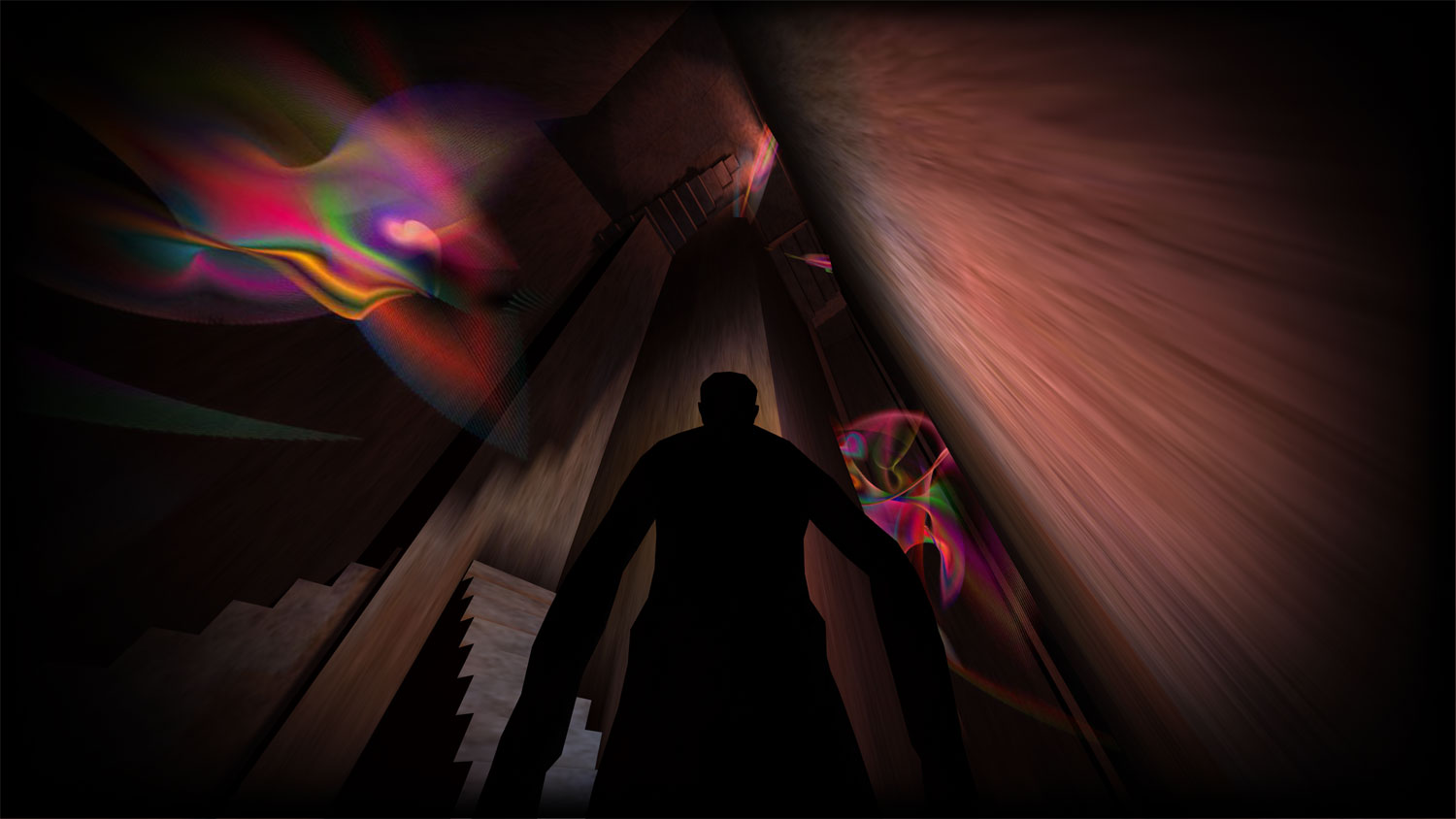
Our current projects include creative video trailers and educational resources for the ground-breaking transmedia work Inanimate Alice; an experimental fiction piece called 'R' (pictured above) which incorporates a sprawling 3D labyrinth with text, audio and photography, as well as beautiful digitally-generated imagery from Jim Andrews' Aleph Null; and a nail-biting cross-platform digital fiction thriller - code-named Duel - which will be the first collaboration between Dreaming Methods' Andy Campbell and novelist/digital fiction pioneer Kate Pullinger. 

To keep up with what we're doing, follow us on Twitter, or check out exclusive previews/screen shots of new work on our Facebook page.

Andy Campbell will be at the Narrative Futures event at FACT, Liverpool on 17th November presenting/talking about Inanimate Alice as well as at the Award Ceremony for the New Media Writing Prize 2011 at Bournemouth University on November 23rd. 

Wednesday, 29 June 2011

Ebb & Flow


We’ve just finished working with Kate Pullinger on a new website called Ebb and Flow, a showcase of work that is the result of a collaboration between five Ipswich secondary schools, five digital writers, USC, and artsroute, an arts-in-schools project based in Ipswich.

Teachers, students and writers (Kate Pullinger, Tim Wright, Chris Meade and JR Carpenter) all worked together to create a large body of fantastically colourful and ambitious ‘new media stories’ which Dreaming Methods’ Andy Campbell then took away and wove into an interactive website.

The site was built using a mix of HTML, Javascript, Flash, jQuery and Google Maps. There are stories and poems embedded inside rubber ducks floating down the River Orwell; an interactive hand-drawn map littered with visual poems and dark fairy tales; a mouse-responsive 'Gazette' newspaper containing embedded video news reports and animations; and much more. This is a great project that we've thoroughly enjoyed working on.

Check out the kids' creativity on your desktop computer - or sample it on your smart phone - by visiting http://www.ebbflow.co.uk

Tuesday, 10 May 2011

The Digital Fiction Desert


A friend of mine recently described the e-literature/digital fiction scene as a ‘small and marginal field with active people spread across continents.’ This was in response to a rather miserable message I sent to her about feeling – sometimes – like I was ‘working in a bit of a desert’. 

The e-lit scene of course isn’t a desert at all, as a quick glance at this impressive list of authors demonstrates http://elmcip.net/author. There is a lot going on (albeit slowly) and I enjoy regular communication via email and Twitter with a number of brilliant people in the field. My comment was more aimed at the lack of a sense of a central community; of sharing ideas, source code, work in progress and development techniques; of why there doesn’t seem to be anywhere to go to experience that on a wider scale.

Having recently switched from producing digital fiction in Flash to developing it using open source technologies like jQuery and HTML5 – a move largely triggered by Apple’s banning of Flash from the iPad and iPhone platforms  – I can see why words like small, marginal and desert might sometimes ring true to others working in this field: creating digital fiction in Flash used to be hard enough in itself, but now the visual tools that at least held some sort of hope seem to have disappeared – as has the consistency of knowing that one file, thanks to the magic of Flash, will look pretty much the same across all Flash-enabled browsers and devices. Now it’s down to hand-coding; back to the unpleasant fundamentals.

Although I haven’t been put off by this adjustment, it does make me feel very sad that the majority of writers without a strong background/intense interest in technology wouldn’t even entertain trying to create work in this way; you’d have to be pretty obsessed (like I am unfortunately) to even begin to tackle the technical barriers. And that’s a great shame, because creating this sort of digital fiction can actually be very exciting.

Thanks to the fantastic efforts of Peggy Riley at East Kent Live Literature, I had the rare chance to run a ‘digital fiction workshop’ for interested writers this month. Spanning two days, the workshop included a brief introduction to the concept of electronic literature before moving on to accumulating resources, finding free (and not so free) software and even attempting to hand code a simple open source page of digital writing. The final few hours were not for the faint of heart: having downloaded my new Digital Fiction Boilerplate (a resource aimed at simplifying things for writers with a bit of scripting knowledge), the group then opened HTML and Javascript files in bare-bones text editors and modified the syntax to achieve minimal but gratifying results. I remember thinking how fantastic it was that these writers were getting their hands dirty and having a crack at this – but also thinking why the hell does it have to be so complex?

Of course, there are many visual tools available for designing web pages. You can also freely build stories online using blogs, content management systems, social networking and online media creation tools – all without touching a line of code. But what about realising imaginative ideas that don’t fit into any of these pigeon-hole software packages or highly branded services? What about trying to create truly hybrid forms of fiction that place the written word onto a new kind of canvas compatible with any sort of popular device or platform? There doesn’t seem to be much out there for that.

For Lyle Skains, a PhD researcher exploring multimodal creativity through print and digital stories and a participant on the workshop with strong technical knowledge, the session was “the first time I've gotten to actually sit down with anyone else who writes this stuff”. On her blog entry Thoughts on @dreamingmethods’ Digital Fiction Workshop’ she continues “I don't know why everyone doesn't do this. This kind of work isn’t going away. These workshops need to happen WAY more often.” 

It would be great if they could. Once the tough curtains of web technology have been poked open a little, it’s not hard to get writers excited by this new form of literary expression. It’s a shame though that there’s no globally compatible drag-and-drop tool for creating imaginative digital fiction, one that would cut out the dreadfully off-putting need to know the HTML code for embedding video or the commands required to make text move, transform, or appear and disappear. This, along with a central community and resource, might form a valuable oasis as it were, where writers relatively new to the practice could freely experiment, see instant results, get a leg up over the technical barriers and truly start to make some digital fiction inroads.

Monday, 9 May 2011

Open Source Projects Launched


Read our latest newsletter to find out about our new open source projects.
Available free for desktop and iPad.

Tuesday, 15 February 2011

The Hypnagogic Trenches

"Dreaming Methods is a creepy excursion into the hypnagogic trenches: part waking, part wonder, part abyss. It is also an exercise in sustained stylistic grace and a profound engagement with digital literature. Over a decades`work, Andy Campbell has succeeded in developing a signature that combines sophisticated coding, narrative torque and aesthetic fastidiousness... The work aims not to sell or to shock but to shelter in homage, lost memories, latent dreams, bits and bandwidth, esoteric audio-visuals and intricate code. Swaying between being lost and feeling loss, it iterates (and exits) loops both computationally and emotionally."

Reflections on Dreaming Methods by multimedia poet David Jhave Johnston -
http://glia.ca/conu/digitalPoetics/prehistoric-blog/2011/02/13/2000-dreaming-methods/

Dreaming Methods Labs now open

Nightingale's Playground available in HD resolution
Dreaming Methods Labs is an experimental site which showcases new in-progress works of digital fiction from Dreaming Methods. As well as offering intriguing glimpses of our latest work (currently including Changed and a special edition of Nightingale's Playground at high definition resolution) the site also features free source code (both Flash and open standards), links to a wide range of resources across the web, plus number of bizarre 'lost' projects that never quite made the final grade.

http://labs.dreamingmethods.com

Tuesday, 25 January 2011

Dreaming Methods Reloaded

Screenshot from the new look website
We've just uploaded a new front end for Dreaming Methods that better reflects the type of fiction/media projects we've been developing for the last ten years.

The re-design sees a return to our customary darker colours and offers links to all our main work up-front as well as showcasing our latest adventures in a wide banner area. A short trailer featuring speedy screen captures is also accessible from the homepage.

We're now offering a more honed-down selection of resources including self-executable versions of some of our projects (Windows only so far), the original scripts from The Virtual Disappearance of Miriam and a 10mb ZIP file containing our entire Amiga archive for use with an emulator.

Within the next week or so we'll be launching Dreaming Methods Labs where our latest experiments can be freely downloaded and explored.

www.dreamingmethods.com

Friday, 17 December 2010

No going back

As readers move away from print-based conventions and habits, they inevitably begin to engage in a different process of reading and meaning-making. The role of the visual in the rendering of written texts is taking on new possibilities and transforming how literary fiction itself can be created and experienced.

Whilst many visual techniques have already been applied to fiction in print (House of Leaves, Only Revolutions, Filth, to name a few) the potential of the written word physically changing over time in the context of a story is much less explored.

But is it wrong, lazy, indecisive, gimmicky, or even downright superficial to time-manipulate the very language used in a story? Should the written word ever be "placed on a timeline" in the manner of video and audio and made to perform in this manner? Does it make the reading experience far too difficult, broken, distracting - even totally unnatural?

Dreaming Methods uses the idea of blurred out/barely-readable bits of writing in Capped, the story of a half-remembered childhood memory. There, fragments from the protagonist's recollections hang around in and amongst trees, bushes and bits of weeds as though on the fringes of consciousness. When the project was first launched back in 2006, some readers complained that they simply "couldn't tell what it said" - one person remarking that he thought it must be an error with his computer or within the project itself. Others - thankfully - got the idea that you weren't meant to be able to read it.

We used text fragments that animated/changed over time in The Diary of Anne Sykes (2003) (along with maths-generated text "sculptures" reflecting the protagonist's bizarrely ordered thoughts) but its clearest use is in Dim O'Gauble, where the voices of a young boy and an elderly woman ponder over a series of mysterious apocalyptic visions. Words within sentences physically transform into others without warning - sometimes polarising their meaning; at other times, running through lists as if the exact phrases can't quite be found. In this project there are no interface mechanisms in place that reflect the experience of "turning a page" or being able to leisurely return to re-read anything; once the writing has disappeared - and it does, quite quickly, over time - that's it, there is no going back.

The use of such techniques in literature may be so alien to readers' usual habits of having a steady flow of pages and the ability to control their reading pace that the immediate reaction is likely to be one of disruption and frustration. For many, there is something highly unsettling about the physical movement or transformation of writing. The written word with its history of having been honed down to high quality and published in a fixed and 'final' manner tears up its own roots and wanders a good distance out of its comfort zone when introduced as a transient/changeable/unreliable form.

Yet surely this is a powerful reflection of how human memories and personal histories fluctuate; how perceptions mutate and adjust; and how sometimes, painful as it is, there is no going back in quite the same way to that original relationship, memory or experience.

Perhaps this is one way in which future literary fiction might realise itself? Writer/s threading powerful, well-crafted, digitally enhanced/manipulated texts through a tapestry of other media forms that provide engaging new worlds for new kinds of readers - readers undaunted by the fact that going backwards or reading/understanding every word may not be possible, and who are prepared for the very fabric of the text to come alive.

Sunday, 28 November 2010

jQuery and Digital Fiction

Changed, a digital fiction project for desktop and iPad

Dreaming Methods is concerned as much with the visual appearance and manipulation of its digital words as their actual meaning. For us, being able to apply graphical styles and time-related effects to the very writing we produce is of extreme importance, which is why we've started building up an interesting toolkit that explores what it's possible to do with jQuery  - an open source javascript framework - when it comes to creating digital fiction.

We've been using jQuery in commercial web design projects for a long time now, but it's only recently with our experimental move towards developing a 'web app' for the iPad that it's come into our minds as one potential solution to creating electronic literature.

Basic jQuery and HTML/CSS isn't rocket science. Although it requires learning some syntax and 'going under the hood' rather than clicking a few buttons in a visual editor, it's a long way from deliving into hardcore programming and you can see quick, rewarding results with very little effort.

Example scripts and tutorials are everywhere on the web. There are 'extensions' galore available - most of them free to download - and, in contrast to working in Flash, there is no compile/publish procedure required to generate an end result. jQuery is free; no 3rd party plugins are needed; it's generally cross-browser friendly; and it even works, with some processing speed limitations, on the iPad.

So far, through pure experimentation and using a combination of relatively simple jQuery and HTML/CSS, we've managed to achieve the following:

- blurring of text, either static or over time
- glowing text effects, static or over time
- narratives that trigger others to appear or disappear 
- click (or touch) areas to show/hide narrative segments 
- slow fading of narrative segments over time 
- transformation of sentences (adding or removing words) on click/touch
- draggable graphic or text objects

- rotatable graphic or text objects (via jQuery Touch; iPad only)
- plugin-free video and audio playback 

Whilst the above may seem like a relatively simple technical checklist (almost all of it is incredibly easy to do in Flash), it is in fact an indicator that the Dreaming Methods 'canvas' onto which we can write purely digitally - outside of Flash - is being slowly primed.

Once we have built up our skills and resources enough produce work in an environment that takes our existing techniques and principles further (rather than forcing them backwards), we will undoubtedly start to assemble new stories in this manner.

Should any digital writers be interested in mixing their own work with the same kind of approach/technology, we would be happy to share our findings and, who knows, maybe even strike up a collaboration.

It would be good to create forum/hub for digital fiction writers - particularly those interested in breaking away from their central reliance on Flash into open source technologies - where discoveries such as these can be posted and scripts and tutorials sought and freely downloaded.

Please do contact us if you think this is a good idea. If we had enough interest, Dreaming Methods would be more than willing to open up some kind of 'digital fiction writers resource' for all to share.

Wednesday, 10 November 2010

Digital Fiction on the iPad


We're currently working on a new digital fiction project outside of Flash which targets the iPad as well as regular web browsers - using open source web technologies.

'Changed' based on a script by Lynda Williams features a heavy mix of audio, text and video woven into a Web App via HTML5 and CSS3, bypassing Apple's App submissions policy and Flash CS5's App export option. It will be possible to 'bookmark' the work and add it to the iPad's home screen where it can be launched - like a native App - at maximum resolution.

Whilst the creative restrictions of HTML5 and the iPad have been apparent - both showing an incredible desire to divide rather than mix multiple forms of media - we have bypassed almost every barrier to create an atmospheric work that follows the thoughts, experiences and memories of a girl who has been recently attacked and is hiding and reflecting beneath a roadway tunnel.

As previously mentioned, the piece will not be exclusively iPad-only. Standard cross-browser desktop versions are also under development which will utilise enhanced javascript code and take advantage of high rather than low powered processors.

Monday, 27 September 2010

Nightingale's Playground

It's raining in 1989. Teenage schoolboy Carl lives with his grandmother on an anonymous housing estate and spends his time hanging out with Alex, an oddball kid obsessed with pseudo- philosophy and computer games. When Alex disappears for no apparent reason, things begin to change: Carl finds weird objects in his gran's sideboard; his science fieldwork book reveals mysterious numeric codes; and none of his other friends even remember Alex.

Created by Dreaming Methods authors Andy Campbell and Judi Alston, Nightingale's Playground is an ambitious work of digital fiction divided into four interlinked parts: an atmospheric browser based experience; an interactive virtual book with pages you can turn with the mouse; a short eBook download; and an immersive 3D game-like application that takes the written word into strange new dimensions.

http://www.nightingalesplayground.com

Wednesday, 15 September 2010

Carving a written narrative into a 3D environment

I've been thinking about producing a narrative in 3D for a long time - the concept in my mind goes back a long number of years. The difficulty has always been the availability of software to do the job well (and without requiring years of experience), the right 'story' to suit the medium, and indeed the time it would take to pull something off that actually (hopefully) worked.

We're close to letting Consensus Trance II out of the box. It's not an iPhone or iPad App (so just carry on with what you were doing, publishers) and we're not telling a simple story in a regular way: this is a complex, multi-layered narrative that tries to do something that I hope is relatively new and pushes the boundaries of where a written narrative could go.

There is no particular target audience and no association with any famous writers, mythical stories or indeed TV programs or films. It's a work that's been generated out of nothing and has no particular connections with anything 'hip' or 'happening'. It's only inspiration comes from a very old, 8-bit computer game called The Sentinel - a unique strategy game that baffled magazine reviewers when it was originally released back in the 1980s.

Consensus Trance follows the story of a young man reflecting on his own rather bleak and depressing school days - only to discover that some of the simple memories he believed were true (and had always based his principles on) seem to have been completely twisted and self-invented. Further reflection leads to some frightening revelations - including the fact that he might actually be part of some omnipotent and sinister reality experiment.

Tuesday, 10 August 2010

Dreaming Methods on The Literary Platform

"We believe readers – as well as writers – are evolving and that the type of work we’ve been creating for a decade now may potentially have a serious future."

http://www.theliteraryplatform.com/2010/08/unchaining-writing-from-its-paper-based-roots/

Thursday, 5 August 2010

Impossible Journal

Celebrating 10 years of digital writing, Impossible Journal is Dreaming Methods' first magazine-style publication and features a series of stories-behind-the-stories from our ambitious digital fiction projects.

Impossible Journal
Presented through issuu.com - a leading-edge virtual publication portal - the first edition of Impossible Journal includes dream-inspired prose and fiction set amongst striking graphic design - plus an atmospheric soundtrack - Music In The Shape of Eleven - created by sound artist Matt Wright.

From a man who one day decides to violently attack his neighbour (an epilogue to Floppy) to a pair of schoolboys intent on burying their science fieldwork books to increase their authenticity (an extract from our forthcoming work Nightingale's Playground), Impossible Journal offers new insights into Dreaming Methods expansive digital fiction portfolio that has been online and growing since 2000. 

http://issuu.com/dreamingmethods/docs/impossible_journal
 

Thursday, 15 July 2010

Digital fiction is a different type of reading experience altogether

These days reading from a screen is considered pretty normal - every day millions of people read emails, news articles, blogs, online journals (often long) and book reviews from laptop screens, computer monitors, iphones, ipads or other portable devices - without considering printing anything out. Publishers are starting to finally, sluggishly embrace the digital transformation the music industry went through years ago and reproduce their catalogues in electronic format for paperlessly downloading and reading.

Although these moves into the digital arena are to be applauded, Dreaming Methods remains interested not only in trying out new ways of writing fiction, but presenting new and challenging ways to approach reading it.

Whilst many ebooks are now available in "enhanced" editions with audio soundtracks and other DVD-style extras, very few publishers are experimenting with the truly new storytelling possibilities offered by this gradual shift into digital.

In the digital world, text does not have to stand still, can be superimposed against colourful backgrounds, animations and imagery with no print design restrictions or costs, and it can also change and mutate depending on a user/reader's interactions. It is as if the physical entity that is text itself has changed from static to liquid, has learnt to move around and react in response to other media - and is thus able to form new narratives-in-motion which require different methods of both writing and reading.

Textual narratives are approached by Dreaming Methods as a key part of the multimedia mix rather than as the absolute central backbone - purposely open-ended, ambiguous, short, fragmentary - and are often additionally considered to be a powerful visual element: blurred, obscured, transient, animated, mouse-responsive.

Reading from the screen is not the same as reading from the page, and being able to fully read-to-the-end and/or completely understand (or even properly see in some cases) the streams of text within Dreaming Methods projects is not considered a requirement for a piece to "work".

Contact us

Monday, 26 April 2010

New Work : Glimmer


A new visually rich short digital fiction work is now available to experience on Dreaming Methods called Glimmer. A small parcel containing a bizarre and seemingly meaningless object arrives one morning triggering an unexpected memory in the protagonist.

http://www.dreamingmethods.com/uploads/glimmer/

Prize for New Media Writing

Dreaming Methods' Andy Campbell is on the judging panel for a major new UK prize for new media writing - alongside Michael Bhaskar, Tim Wright, James Pope and Tracey McGarrigan. Poole Literary Festival have partnered with The Media School at Bournemouth University to establish the Prize, which will allow writers working with New Media to showcase their skills, provoke discussion and raise awareness of new media writing and the future of the written word. The competition is now open for entries. The deadline for entries is Midday, 15th September 2010.

Thursday, 15 April 2010

Essential Digital Fiction Resource Pack

We've been having some great feedback to our first Resource Pack which is still available to buy via Paypal from the Dreaming Methods website for £19 ($29) with many buyers telling us that they are using elements of the code to enhance and redevelop their existing digital fiction projects.

Featuring the Flash source code of Capped, The Rut and Floppy, the digital download pack reveals how Dreaming Methods projects are assembled and contains a 9 page hints and tips document 'Dream Building'.

The Capped source code includes all of the original graphics files, compressed Flash video sequences and raw prose originally written for the piece, plus additional 3D renders and artwork of the alien machines that appear in the work. There are also 7 bonus source files - from an imaginary ocean to the basics of an atmospheric, mouse-responsive interface.

The graphics, material and source code in the Pack can be freely used or adapted for use in your own creations.

Click here to take a look.

Wednesday, 24 March 2010

Digital Publications

I don't usually post personal comments to this blog but I felt compelled to write something after seeing a number of Apple iPad demo videos lately, such as the one on this page.

It looks like the entire publishing universe is moving in the direction of 'digital fiction' at the moment and because of this the concept of enhancing reading experiences with digital media is becoming not only acceptable but considered 'leading-edge'. Publishers are wiring themselves into every possible digital avenue to offer electronic versions of their works, from simple epub documents through iphone and ipad magazines to collaborations with games designers. It's all good, but as someone who has believed in the exciting potential of all of this since the mid 1990s and experimented with fiction and new media online since 2000, I can't help but find myself with mixed feelings about it.

The previously mentioned ipad video demonstration I think highlights my main frustration with what seems to be going on here. Elements of media are not so much being mixed together - blended into something new - but rather being superimposed ontop of one another. There is still a distinct seperation even though each media type might appear on the same canvas. Looking closely at the iPad video reveals nothing more than a simple play-and-pause video sequence (okay, so it has blockbuster-film style graphics but how many thousands of times have we seen this stuff; slow motion blowing hair and Panic-Room-style whooshing around) overlaid with text-boxes, not too unlike hundreds of polished Flash design agency sites.

Does this change, mutuate, enhance or do anything at all to the reading experience or the way the text has been written?

A few years ago it was common to see comments across the web suggesting "new types of authors" but it's only recently that I have started to see comments on the flip-side of this starting to pop up. For example - "we're about to discover a whole new way of reading." My question is - are we? Is it a "new way of reading" or just another way of sticking the same old media side-by-side so it's all on one plate rather than seperately digestable?

See comments posted to the New York Times article. Some interesting responses to the whole concept of mixed media magazines.

I don't want to linger on this particular iPad video response, or to start rattling on about the many digital authors who've been harping on about the potential of digital fiction for years - I do generally think the move that publishers of all kinds are (slugglishly until recently) making into the digital area is - overall - good (even if eBooks are dull). But I couldn't help but stifle a laugh seeing the "behind-the-scenes" interviews of this production with its film effects crew standing against green-screen with barely-dressed Poser-like models in the background wearing thick black-rimmed glasses and talking about how they're "doing amazing new things" with publications - like nobody thought of it before they did.

As one of the New York Times reader comments states: "isn't an "all-digital magazine" just a website?"

Friday, 19 March 2010